As you do from time to time, I was thinking about what leadership looks like.
After a full-on couple of weeks I was catching up on work this week. I had to pull a few things together and it was a lot easier because the direction I wanted to go in was clear and I already had the buy-in from the others involved. So what was left was really just the logistics that needed to be taken care of.
I often think of the leader as the one who makes the direction clear, or the one who facilitates a shared view of where to go. In that respect I would say that people like John F Kennedy and Abraham Lincoln are famous for setting a compelling vision.

But I had cause to reflect on that assumption this week, or at least to look at leadership from a different perspective.
I committed to do a few things, as you do. But in some of them I found that the work had already been 80% done by someone else. All I had to do was pull things up and refresh them and then confirm people were happy.
I told my wife that I had been lucky and things had fallen into place. But she asked me if I was being dodgy.
I remember I once did 95% of the work on something. Then my boss delegated it to someone else and they came to me for help. They finished the work and got called out for great delivery. I hope you are not going to be like that guy.
The voice of conscience
I said I was not going to take credit for someone else’s work and then we had an interesting conversation about unconscious bias. I had just read a book about communication and it had a case study where a woman in a leadership group kept offering some suggestions that were ignored, but soon after some man would make exactly the same suggestion and everyone would jump on board.
The book was “Connect”, by David Bradford and Carole Robin. But the story is an old one and I heard that even in Australian Politics, I heard that Julie Bishop told a similar story about speaking in Cabinet Meetings.

But I digress. I am not conscious of having an unconscious bias like that. The same person who had done the work I was building on actually displays a very powerful version of leadership that this is only a minor example of.
Visible leadership can seem like the moments that go in the history books, the moments when a leader is on stage, setting a vision and making some speech. But most leadership is not about a single famous speech. It is not even about the leader. It is about the team who are being empowered to take center stage themselves.
Reflecting on this, I believe that consistent leadership is more about setting the stage for the team to perform, rather than giving a good performance one day.
Leaderships should, of course, include giving feedback to people where they may not be aware of their biases, or they might not remember to give credit to others. But it also involves setting the stage for them to succeed.
“Setting the stage” might include doing some of the work to make it easier for others to focus on their work without distraction. But it also involves trust. Not trust that you will get the credit for that work, but that the other person can build on that work to deliver the “punch line” or deliver an outcome successfully.
That might include providing resources, having good processes etc. It might also look like welcoming people to the team and setting the stage for them by creating a positive environment that encourages good collaboration.
But I think setting the stage even goes a step further. Consider great comedy teams like Laurel and Hardy or Abbot and Costello. OK they were before your time, but trust me, they were teams and they were funny.
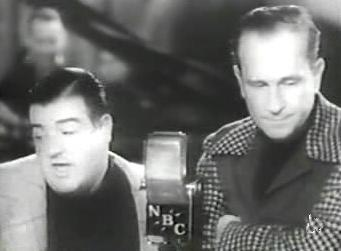
When you see these teams in action they seem to be making joke after joke and the audience if filled with laughter. But if you look closely they are each only making jokes some of the time.
For every joke that one of them gets to land, the other one spent time setting them up for the punch line.
I think that is an important part of leadership – setting the scene for the team or team member to deliver the punchline to great applause.
In this case, someone doing good work in the past set the scene for me to deliver the punchline. Or at least it created a basis for me to build on instead of having to start from scratch.
Looking back it was similar in the hectic couple of weeks I just finished. I delivered a successful project but only after others had defined a useful outcome and lobbied support from others.
Setting the scene in this case meant creating the factors needed for my project to be successful, so that I could pull it together and then get kudos for a job well done.
It also involved “leaders” who championed my project by encourage their team members to contribute when needed, trusting that the contribution would be worthwhile. So once again it involved setting the stage for others to succeed.
More generally then, I notice that the leaders often spend time setting the stage so that others can step up on stage and be successful.
We see the person stepping up, but they see the leader setting the stage for them to do so.


Leave a Reply