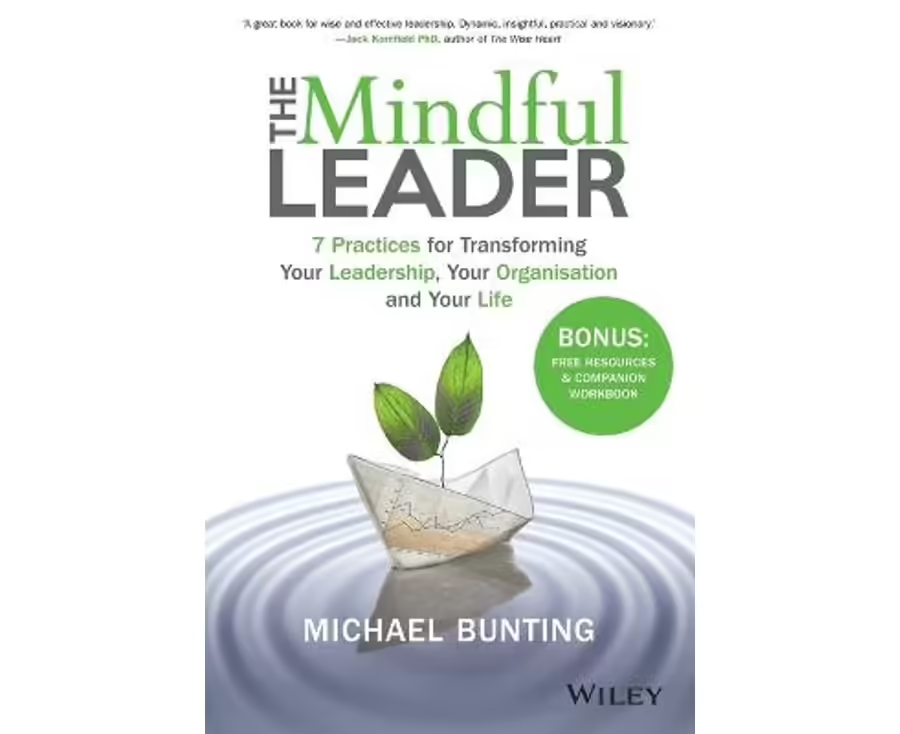
I just read a book on “Mindful Leadership”. I like to read books on mindfulness, leadership, presence, and similar topics because I usually have one of two reactions.
Sometimes I feel a rush or Self-Affirming outrage. I almost want to yell at the pages of the book when I spot egregious errors or jingoistic regurgitation of motherhood statements and hippy propaganda that inevitable success follows on from a modicum of EQ combined with a blind confidence that the universe will deliver success to those who want it.
In fact sometimes I think the author has a totally different definition being mindful.

I am not sure such a visceral and disdainful reaction is really in line with being mindful. In fact I know it is not – especially when I claim I am exploring someone’s views on mindfulness.
It is, after all, a mindless and self-constraining reaction. I still enjoy it htough because it gives me a guilty sense of joy in the same way that watching reality TV shows like “Married at First Sight” does.
I get to sit there and think “Evolution and Centuries of Civilisation Should Not Have Led to This”. I believe that even cavemen already knew that paying attention to the world and respecting others led to more satisfaction and less untimely death. Yet some authors seem startled and proud of having made the same discovery much more recently.
Anyway, the other reaction I get is probably more mindful and leader-like.
I read a book with an open mind and the author shares views that I can digest.
As a result, I encounter ideas that cause me to pause and reflect on what I am doing, or on how the content of the book actually helps me to better understand the ecosystem around me and the reason things are as they are, or how they could be different.
Unusually, this particular book inspired neither of my usual reactions, at least at first. Perhaps I was not in the right place with many distractions or perhaps the content was similar to what I have encountered from other sources.
The book contained material that I was mostly familiar with and did I did not really get into the suggested practices. It also lacked any opportunity for me to mindlessly mock the author or feed my confirmation bias with reassuring thoughts that I already knew the important things.
So I skimmed the book and returned it to the library.
A couple of days later I found myself pondering on some of the material in the book, as I encountered situations where it seemed relevant.
There was a quote from Gandhi, that said “Happiness is when your thoughts align with your thoughts and actions.” This is a great saying, but heard it before.
There was a lot of material around the idea that wholesome values (like respect for others) are core to leadership, which I agree with, AND core to being mindful, which I am not sure I fully agree with.
I can see that there is a relationship:
- For me, mindfulness is the opposite of mindlessness. It involves being aware of the present moment, of your own feelings, of the changes or events around you, and of the actions you are taking; while
- Values are the central tenets and beliefs that guide our actions. Acting in alignment with values leads to being happy in the way that Gandhi suggested while behaving at odds with values leads to cognitive dissonance (stress) and either a lot of energy trying to hide reality from yourself or a feeling that is the opposite of joy.
So it is easier to be mindful when you are aware of your personal values and the impact of either a violation of those values or a tension between different values. Similarly, being mindful should create a growing awareness of values.
What I am not so sure about is that mindfulness requires specific wholesome values. I guess I assume that I could become fully mindful and then realise I am a dirtbag – I would be a very self-aware and very observant dirtbag, but a dirtbag none the less.
I could also have a strong set of values and be aware of what they are, while not being in touch with the yin and yang of the world around me.
So, having skimmed the book and taken it back to the library, I went on my way.
A day or so later, I said I would cook dinner before we went out as a family. I also said it would be ready around 4:30pm. However I started late, got confused in my cooking and took until 5pm to actually serve the food. Sadly, we were meant to leave home at 5:10pm so our plans went a bit awry.
My cooking started late because I was not paying attention. Then I got confused because I multi-tasked, moved ahead on parts of the recipe without following the actual details and then stumbled about correcting my behaviour.
This was definitely a case of not being present and allowing things to get out of hand on me, when taking a breath and focusing on what I was doing would have made the task quite easy. I would say that is a lack of mindfulness.
But what about values – is me being incompetent at cooking a lack of values? No, in fact part of my identity is that I am hopeless at cooking. I am quite happy to admit I am a beginner and still learning.
But being good or bad at cooking is not about mindfulness nor values. It is about defining who I am (My personal brand or identity I guess). And it is about setting standards for myself.
I set a standard where I am happy to say I provide “adequate nutrition.” I would be a much better cook if I was a mindful cook though and one of my values is to have a positive, mindful approach to life. So maybe failing to be mindful cook is kind of missing out on that.
But as I pondered I realised there was a much stronger connection. I was not cooking for myself, I was doing something for my family. In this situation I definitely fell short of my own standards. I tell others that things can go wrong but that they should update people if that is going to impact them. I see myself as highly accountable in both my home life and my “leadership”.
So by my standards I should have started cooking on time, even if I needed to set an alarm. More importantly, as things unravelled, I should have alerted people so that those depending on me are able to replan accordingly.
Maybe if I am serious about my value of accountability, then I should make a conscious effort to be mindful when it is needed, rather than being distracted. Similarly, if I was being more mindful and the meal got out of control, I would have known to alert people.
I also ran a workshop for some people at work. It was a straightforward one and not mission critical so I did a little prep and then facilitated away. My stakeholders said it was a great session but when I reflected on it I realised that I was the one who did the most talking and that, while covered our topics, I could have done better.
Again, I am not sure if this is about values or my own standards. People often accept adequate facilitation but I believe myself to be a master facilitator. So my standard is to always do sufficient prep and to be fully present whenever facilitating.
I sometimes fall short on that one, but people accept it. This is where I think my values come into play again. If I value excellence in serving others (not a value I have claimed but maybe a relevant one), or if I have a value of truly respecting those I interact with, then I could use mindfulness to identify moments of truth where I can live up to these values.
This does not involve superhuman effort, but does align with Gandhi’s advice. Happiness is when I say I think I am there to help others, when I say I am going to do that and when I actually do it.
I hit the standard others expected (so they said) but my actions were not fully in line with my thoughts about who I am and what I am capable of.
I could overthink this and stress out by always trying to lift my game. Or I could just remember to pause and be mindful of how I am going to align my goal with my actions.
These are not major tests of my values and I am not going to need to take a week away on a mountain to regain my balance. But in each case living up to both my own standards and my values is best achieved by being aware of what those are and how they apply in the moment I am in.
I might not always facilitate at my best and I am sure my cooking adventures will still be inconsistent. But being mindful might be as simple as being aware not just of the moment I am in but also the link between my thoughts, words and actions.
It is a broader definition of mindfulness than I think of but it is worth pondering.
 James King
Leave a comment